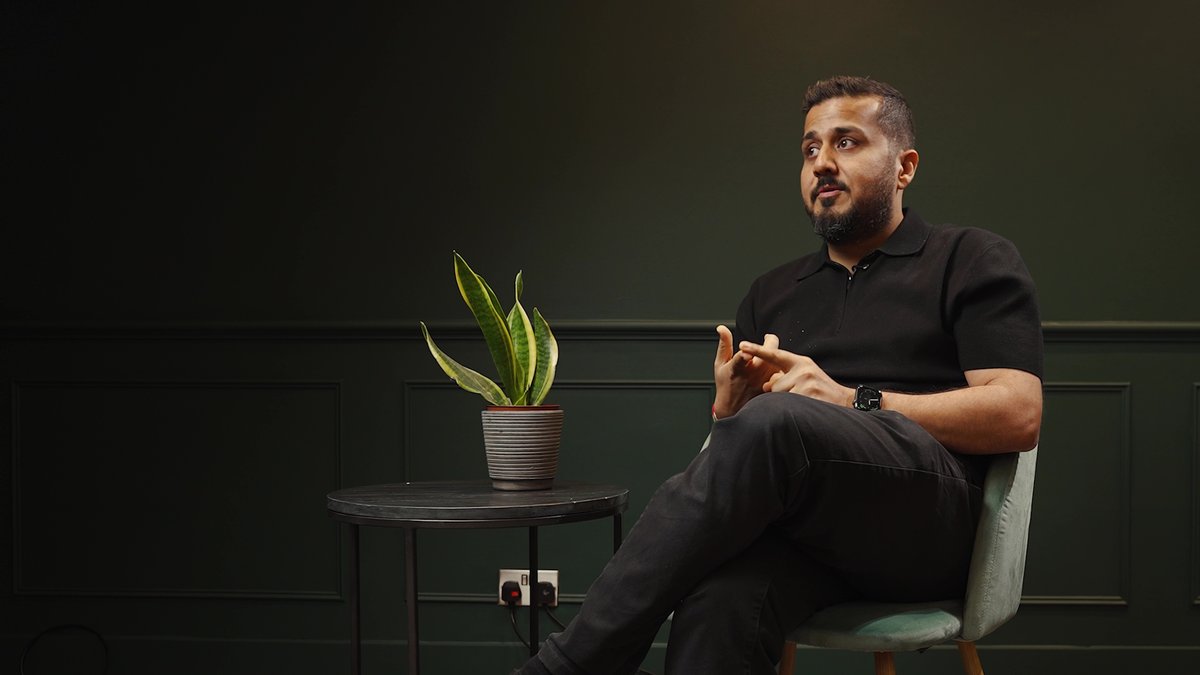
Kev Tanna.
Brand clarity and positioning for founders. The workshop, the retainer, and the network behind it. This site is the front door.
Live · taking founder enquiries
Engineer and sound engineer by training. I think in signal flows: input, process, output, and where quality is lost. Most of what looks like a brand problem is a signal problem somewhere upstream.
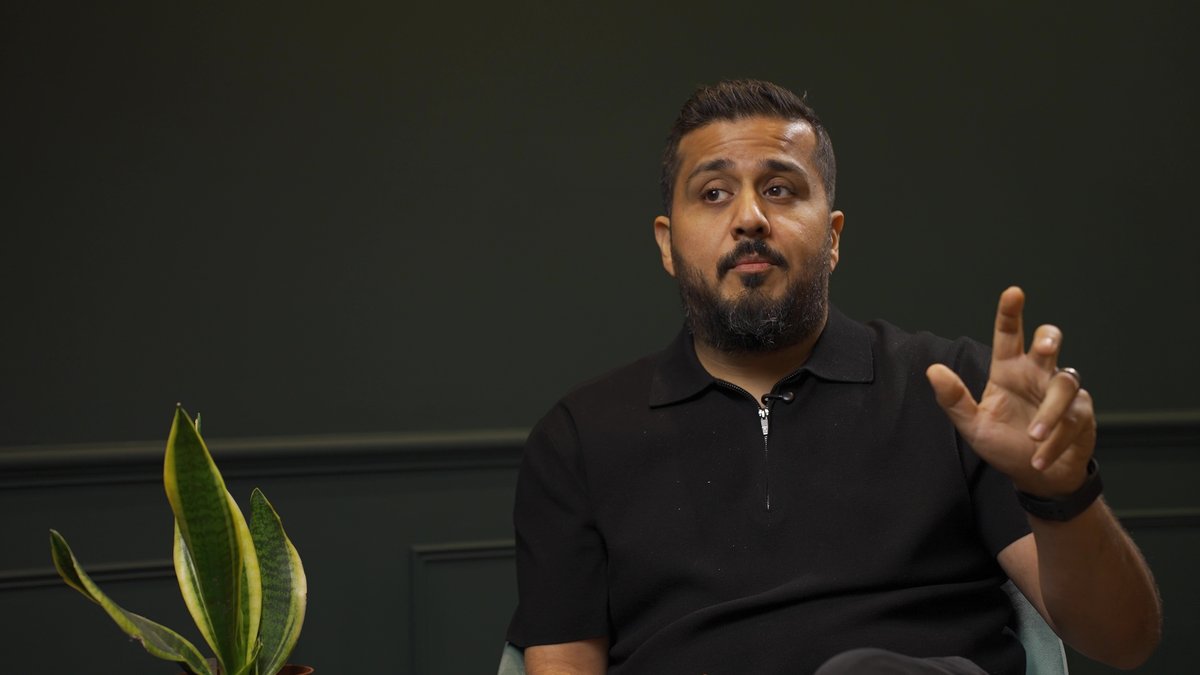
The solution is the most beautiful response to the problem. Aesthetics without story is decoration. Lived experience is the only real moat.
I started shooting events because I was already in the rooms. Weddings. Cultural nights. Community work. The kit was the same kit I used for sound, more or less. People asked, I said yes. Word got around.
COVID arrived and nobody was running events. The business had to become something else, fast. So it became reactive. Whatever came in, I'd take. Photography one month. Podcast production the next. The occasional brand job, mostly because someone trusted me to figure it out.
That kept the lights on. It also did the thing I now warn clients about. The work was good. The story underneath had drifted. I'd built a do‑whatever business that nobody could explain in a sentence, including me.
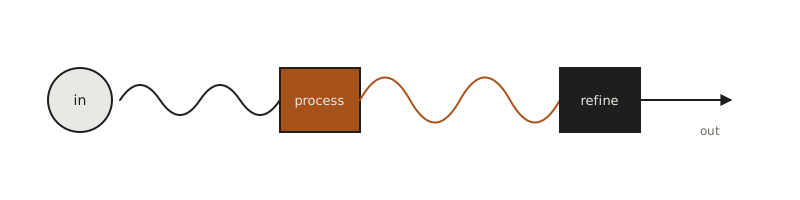
Sound engineering teaches you to start at the source. If the input is wrong, no amount of processing fixes it downstream. You go back and check where quality is actually lost.
That's how I read a business. Whatever a client thinks the problem is, the first job is to follow the signal backwards until we find where the loss is. It's almost never where they thought.
The reason I can spot brand drift in someone else's business in twenty minutes is that I lived inside it for years. I know what it looks like to be busy and still not have a story you can repeat. I know how to drift into a business that won't scale because every job has been a custom job.
Recognising it took longer than it should have. Fixing it meant making three decisions that felt brutal at the time. Stop selling anything I wasn't the best person to deliver. Productise what was repeatable. Put my own name on the front door of the consulting work and own the accountability for it.
What I do for clients now is the same operation I had to run on my own business. I'm not selling theory. I'm selling something I had to do for myself and got right the second time.
Each business sits inside the studio model. Different products, different audiences, the same way of working: clarity first, specialists assembled to the brief, one point of accountability.
Brand clarity and positioning for founders. The workshop, the retainer, and the network behind it. This site is the front door.
The studio the work runs through. Where briefs are sequenced, specialists are assembled, and the invoice is issued from. Operating since the start.
Productised podcast production for founders. Three tiers, transparent pricing, real commercial outcomes. Co‑founded with Priyesh Pankhania.
Documentary‑style personal films. Long form, slow, made in service of the subject, not the algorithm. The imprint I make work under when the work is the point.
If you've read this far, you'll recognise most of these. I keep them on the wall above the desk so I don't drift again.
The uncomfortable observation is usually the one worth ten meetings. I'll say it in the workshop, not three weeks later in a deck.
If the input is wrong, polishing the output is expensive. I'll always check upstream before I touch what you brought me.
Results are reported plain, in the units they belong in. If a number can't be defended in a room of skeptics, it doesn't appear.
You don't need five suppliers. You need one person who owns the outcome and the right specialists turning up when they're needed.
Workshop's four hours, fixed price, written report at the end. If we're not the right fit afterwards, you keep the clarity and we both move on.
Book the workshopNot ready to book yet? The free brand audit will tell you where your gap actually is.